


Technique: Lo-Fi Black and White
- Mat Coker

- Mar 26
- 3 min read
Sometimes the Best Stuff Starts as a Panicked Problem
So here I am, deep in the woods, getting swarmed by mosquitoes, using my camera as a weapon, waiting for trail runners to come through.
It’s getting darker and darker.
Now, this is a nighttime trail run with headlamps, so the idea is for it to be dark, right?
But I'm realizing it might actually be too dark to take a picture.
The Technical Challenge of Low Light Photography
I’m dialling in my settings, waiting for the runners to appear. At this point, I’m just trying to get a usable exposure. Yes, it’s dim out here, but you still need to see the runner in the frame.
That’s the thing with photography—technically, you can make almost anything look brighter, but every adjustment comes with a cost.
I’ve opened my aperture all the way to let in as much light as possible. I’ve pushed my ISO high—too high, really—basically giving my camera cat eyes just to see anything at all.
The only thing left is shutter speed. Slower shutter means more light, but it also means more blur, especially when runners are moving fast through the frame.
The Moment of Crisis
Here comes the first runner. Okay, here we go.
Snap.
Way too dark.
I push the ISO even higher, past where I’d ever want it. The grain is going to be brutal.
Second runner.
Snap.
Still too dark.
I slow the shutter even more, knowing full well they’re going to blur.
Third runner.
Snap.
Still dark, still messy.
So now I’m stuck. Everything is over-maxed, and it’s still not enough.
Then runners come through in waves—four, five, six on each other's heels.
Twenty-five, twenty-six, twenty-seven.
This is a disaster.
But I keep shooting.
The Editing Disappointment
When I get home to edit, I’m hoping the pics won’t be as bad as they felt in the moment.
They’re worse.
The images are dark, and when I try to brighten them, the grain explodes.
Colours fall apart.
Everything looks rough and muddy.
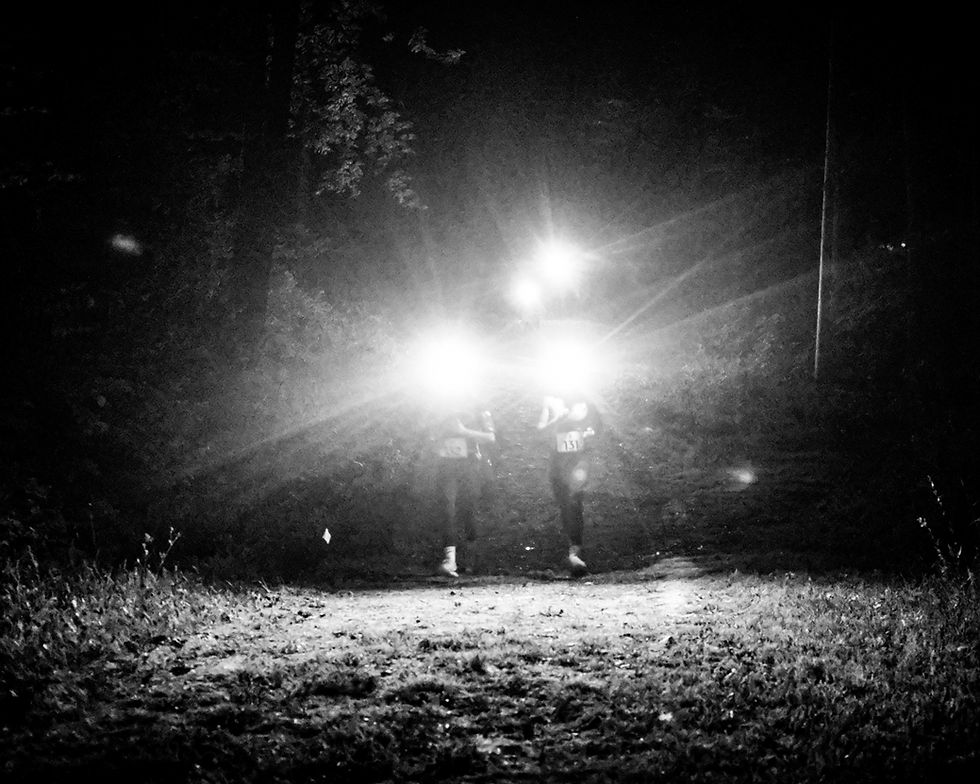
And then, almost by accident, I click a preset and one of the images goes black and white.
And I stop.
That’s it.
Discovering My Love for Grainy Black and White
I’ve always loved grainy, slightly blurred black-and-white images. Especially that mid-20th-century look—where the technology was good enough to capture real moments in low light, but not perfect.
I’ve got an old Life magazine collection of Frank Sinatra photos. I barely know anything about him, but the images are incredible. Imperfect, textured, alive.
And suddenly I’m looking at these night run photos and realizing they belong in that world.
Understanding Why Low-Fi Images Work
Over time, I’ve thought more about why that works.
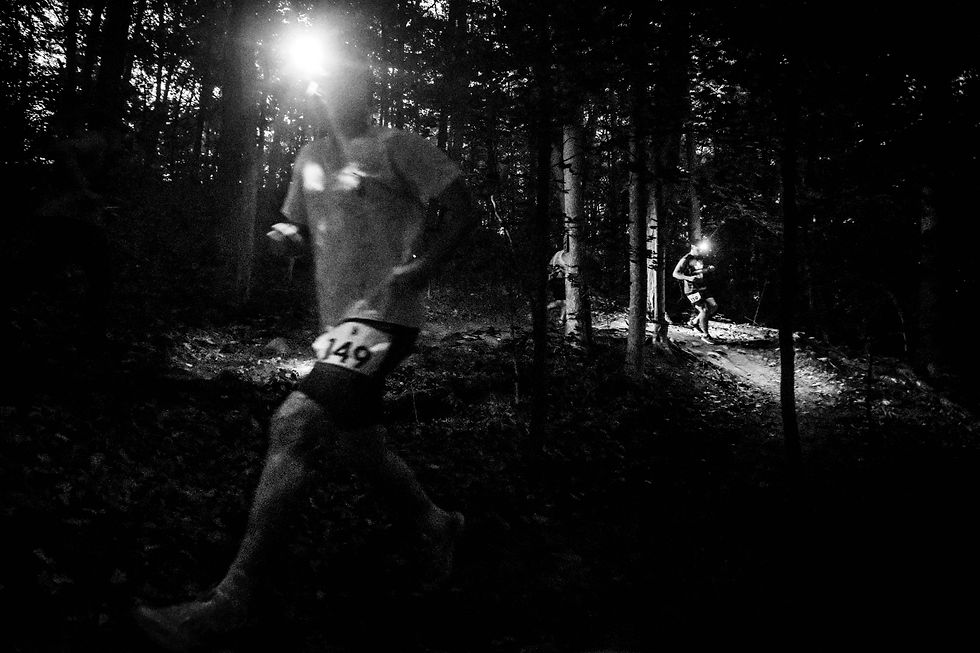
Modern images show us everything. Perfect clarity, perfect colour, perfect detail. Especially with phones now, it’s all so obvious what we’re supposed to see. There’s not much left for us to do as viewers.
But when you take that away—when you strip out the colour, soften the focus, introduce grain—the image asks something of you. It invites your imagination in.
And if there’s just enough there, your mind fills in the rest.
Too little, and it doesn’t work. But just enough—and suddenly the image has more depth than something perfectly clear ever could.
When This Style Works and When It Doesn’t
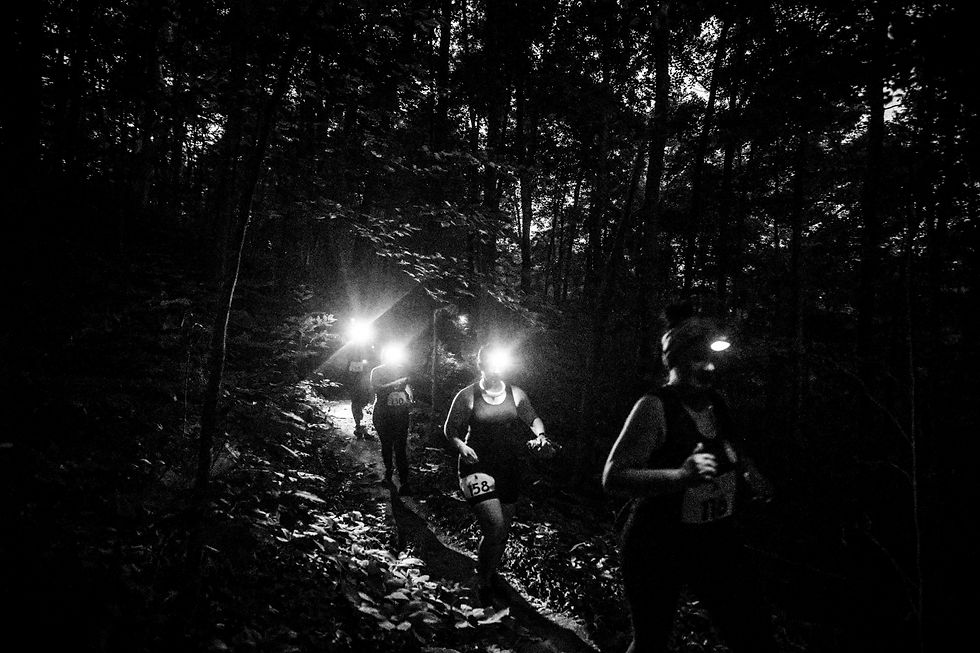
I would never convert a daytime trail running photo to black and white. I’ve tried. It doesn’t land the same way.
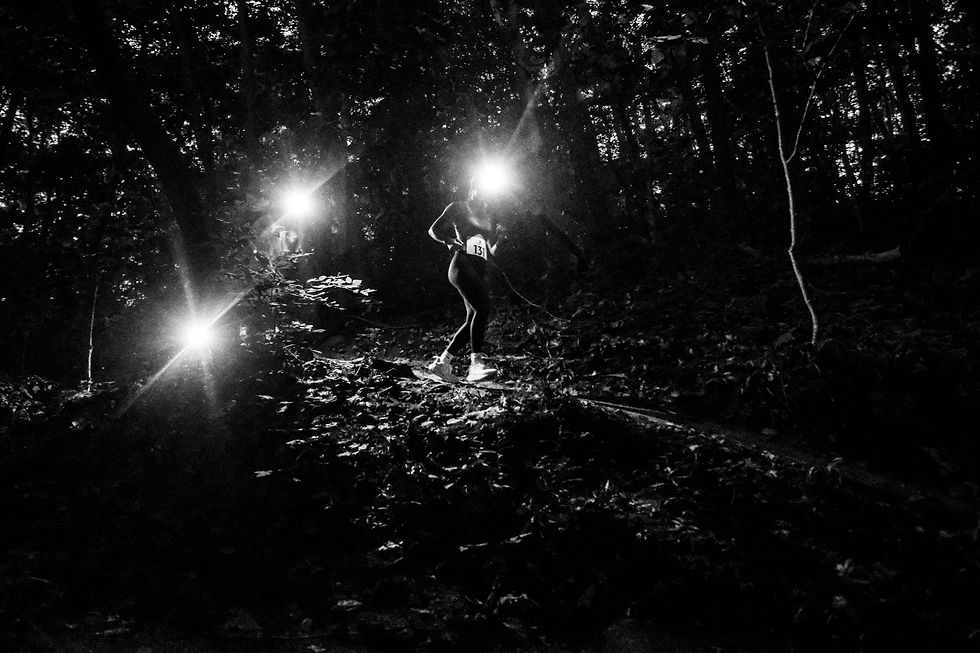
But these night runs, with headlamps cutting through the dark—this is where it works.
This is where the imperfection becomes the point.
Mat Coker is a writer and trail running photographer based in Ontario, Canada.

Comments